


Pittsburgh Choreography Meets Circus: How Collaboration Between Multidisciplinary Artists Creates Exponential Value
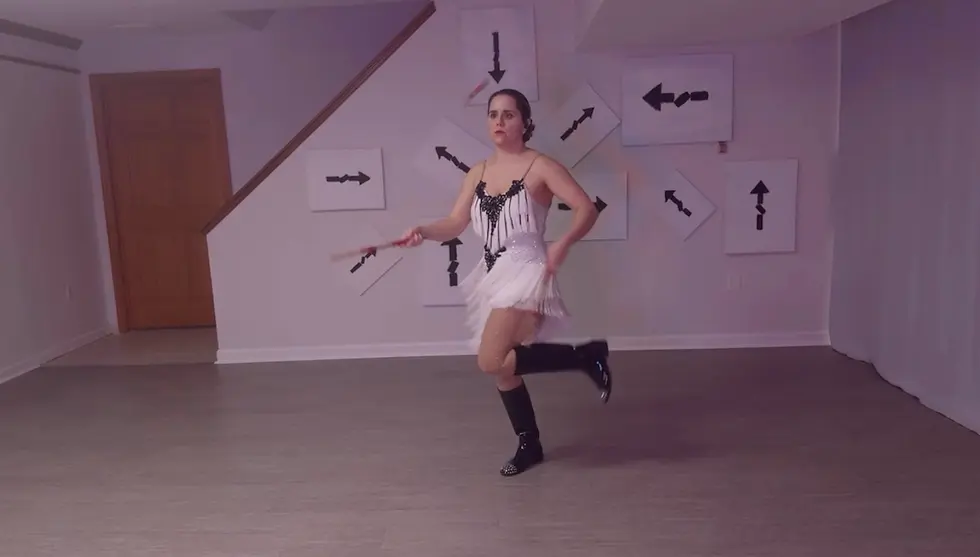
Do you ever notice how artists - especially multidisciplinary artists - have a thing for optimizing basements? Think about it. We are like mad scientists, and basements and lofts are our laboratories. Building stuff. Storing it. Moving it. Moving ourselves like specialised freaks throughout it. It’s messy business. We need that sacred space where we and our work can be both chaotic and contained.
How poetic is it, then, that the space we call The Detour in our short film, Boléro Challenge, was shot in a basement? Even more poetic is the generous spirit who, like her basement, is built for multiple dynamic pursuits: Meghan Greenwood of BaM Choreography.
Multipotentialites Build Ecosystems. Not Just Careers.
Meghan is a woman of many titles. She is the owner and co-founder of BaM Choreography in Venetia, PA. She is an accountability buddy and life coach through her practice, Pgh Dreamer Productions. You can listen to her podcast, Pgh Dreamers Pod, featuring Pittsburgh-based creators, thinkers, and entrepreneurs (she was kind enough to interview me back in 2021). As if that all isn’t enough to make her a basement unicorn, she’s a an artist and a mad scientist.
After earning her PhD in Immunology from the University of Pittsburgh, she went on to a successful career in medical writing. Her highlights include “Vaccinating Against Cancer,” “Targeting T cells to Eliminate Tumors,” and nerdy text threads educating me on heat shock proteins that I, in turn, used to write a blog for a sauna dealer. You know you’re in deep with your friends when one of your pet names for them is your “molecular chaperone.”
In addition to being a medical writer, a serial arts entrepreneur, and my molecular chaperone, she is a rockstar wife and mother of two. How she finds the time and enthusiasm to support the hustles of so many others is truly awe-inspiring.
Meghan and I click because we both refuse to be just one thing when we grow up. While there’s a time and a place to pick a lane, we thrive on integrating multiple thoughts. It’s one of the reasons why I think we both made careers in communications.
We each have brains where two pathways are always active: language and systems. This practice of figuring out what to say and how to say it is kind of like flying an aircraft. To get where you’re going, you have to navigate up and down and left and right at the same time.
We also believe that age is just a number and, therefore, shouldn’t prevent you from pursuing the badassery that calls to you. As refuse-to-choosers, we’re building our ecosystems. Not just our careers. Our ecosystems - multifaceted, coherent environments with resources that help us meet our needs and fulfill our commitments.
Our resources include each other, and our needs include a need to create and express ourselves through art.
While she’s on her laptop purveying medical research, and I’m on mine purveying digital marketing strategy, there’s a weekly 30-minute phone appointment approaching on both our calendars. This is when we talk about how to accomplish the next choreography and/or circus idea. We plan. Schedule. Organize. We approach our art like it’s a business. Our business.
It’s a demanding lifestyle, for sure. But for all the energy it may take, it sustains us even more.
That kind of stamina is necessary because the journey is long, and the path isn’t linear. As Miles Davis once put it, “Man, sometimes it can take a long time to sound like yourself.” And when you’re building an ecosystem, it takes a long time to sound like yourself.
Take, for example, the basement of BaM. The moment it appeared on screen in Boléro Challenge was almost six years in the making.
Artistic Collaboration Starts Before The Project.
Why do long-term creative collaborations succeed? Often, it’s because they don’t start with the words “Hey! Let’s collaborate.” One of those beginnings happened at the old Glitterbox Theater in Pittsburgh’s Oakland neighborhood, where BaM Choreography produced their annual revue, BaM Jam.
It was just before the pandemic hit in 2020. The BaM family had formed a rapport with quite a few local circus performers over the years, so naturally, there were juggling, firebreathing, contortion, and flow acts lined up for BaM Jam. I performed a comic juggle-drumming act. Upon finishing, I walked past a woman I only knew then as one of the BaM founders who said “Y’all make me want to learn how to juggle.”


That was Meghan. We followed each other on social media shortly thereafter, which is how I learned of her coaching practice, Pgh Dreamer Productions. I became her client just as the world was shutting down.
Originally, my goal was to get help overcoming injury-related anxiety at circus. But through each of our weekly half-hour phone conversations, I found the discussion to be so easy and productive that I started telling her about more than my tendonitis.
We built trust one conversation at a time. The fact that we made regular appointments to talk put our relationship on the right track. But the fuel that actually drove the train was a simple but underappreciated practice: Meghan showed up.
She did the thing she said she would do by talking with me at the time we scheduled. And I did the thing I said I would do by paying her at the time we agreed on. We did this over and over and over again.
It seems ordinary, right? Doing the thing you said you would do? I wish.
People tend to draw separate caricatures in their minds of artists and business people. The artists are usually drawn as flaky, while the business people are consistent, regimented folk. If this is you, watch out.
Yes, there are a lot of flaky artists out there (Meghan and I have crossed paths with quite a few of them over the years). But flaky is not an artist trait. It’s a human trait.
We’ve all had to deal with plenty of unreliable execs, contractors, and other specialists who rack up more one-star reviews than Michael Phelps has medals. The best artists I know are good business people. Reliable. Organized. Thoughtful. Never perfect but always professional.
After a year of the client-coach relationship, Meghan and I valued each other not just as true professionals but fellow travelers in life. We found a kinship recognizing how our work, passions, and personal lives mixed and marbleized in similar ways.
We’re nerdy, entrepreneurial multipotentialites with deep roots in the performing arts. It was only a matter of time before we said yes to taking private aerial lessons together. And then collaborating on a choreography video. And then another one. And then another one. And applying for grants in between, so we can collaborate on something even bigger.
All this began between two people who were simply appearing on the same stage one night. Then, one became the other’s client. Eventually, they became friends and, later, creative collaborators. Recently, Meghan and I enjoyed a full circle moment when she became my client. She recruited me to help her strategize for BaM’s organic and paid social media presence.
There are numerous reasons for why artists collaborate. The most valuable, I find, is a shared, sincere desire between you and your collaborator to grow each other’s practice in addition to your own. Meghan and I are both committed to helping each other grow. We went from a mentor-mentee relationship to being peers.
As artists, this helps stimulate our creativity. As business people, this helps us maximize our time and resources. This six-year relationship with Meghan (and BaM Choreography) really came through for us when we needed a creative solution for where to film the last segment needed for Boléro Challenge.
Why BaM Choreography Was the Perfect Home for The Detour
Films are rarely shot in sequence. You may have a big banquet scene at the beginning of a movie and a kitchen scene at the end. But if the banquet hall isn’t available until next month and the kitchen is always open, you film the kitchen first, the banquet later, and then cut the footage together in the proper sequence in the editing room.
Boléro Challenge was no different. With all the venues we needed, we couldn’t expect to book them neatly across one week of our calendar - or one month for that matter. But at least we had all of our venues booked…almost.
In late October of 2025, we shot the scene in which Ekira and Tess list all the Pittsburgh neighborhoods they’ll use as a setting for their Boléro Challenge video. The problem was that the dialogue called for four locations, and we only had three confirmed at the time of filming.
Our solution was to get a little creative with the dialogue.
What if we just made up a place? Not a neighborhood but some sort of gallery or third space with a cool name. We can decorate it ourselves. But what kind of Pittsburgh-centric name can we give this fictitious place so it fits in the dialogue?
That answer came to me on a drive one afternoon, when I passed one of those neon orange signs we Yinzers are all too familiar with.
The Detour! That’s totally Pittsburgh. Our characters will film in Downtown, The Detour, Munhall, and the South Side.
Now, we just had to book a place to become The Detour.
Duh. Why don’t I just ask Meghan if we could use the BaM Basement?
There’s that “Know what you need-lack-have” practice coming into play again. We needed a nondescript place that could accommodate juggling. We lacked time and money. I had a friend with a dance basement. A few text messages later, we had “The Detour” booked for an afternoon in late December 2025.
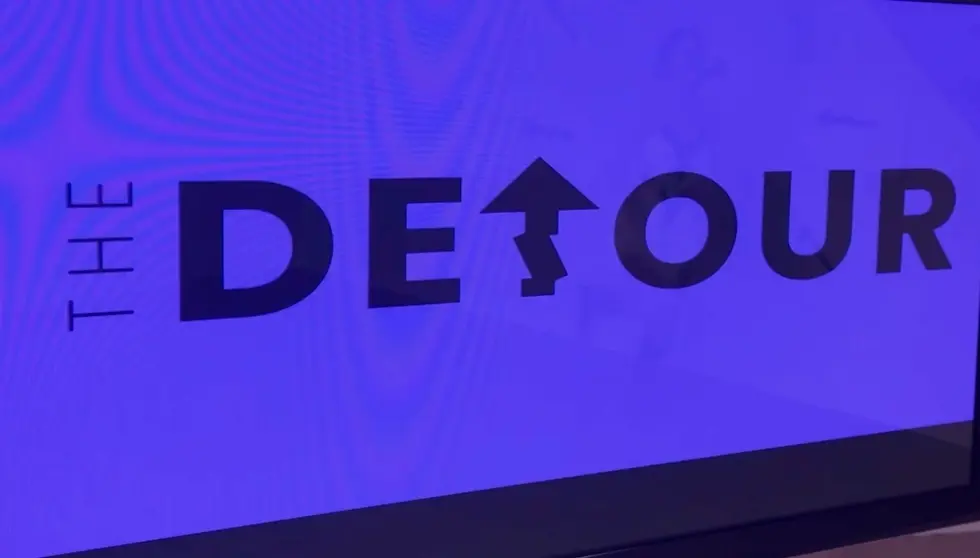
We dressed the space for the part. The flatscreen tv displayed sleek digital signage reading “The Detour” (thank you, Canva). On the wall hung a collection of canvases (thank you, Goodwill), bearing nothing but a black arrow with its mid section jarred out of place.
Once again, the resources of one artist met the resources of another to make the next big thing real.
How Multidisciplinary Artists Create More Value Together Than Alone

One of the most significant moments in Boléro Challenge is also one of the least flashy, and it happens in this scene set in The Detour. It’s when Tess (played by Lindsey Briant) demonstrates to Erika (my character) the vague idea to drop a drumstick behind her head and catch it in the pit of her knee.
She fails. But the idea gets across. It’s messy. Unscripted. We weren’t even wearing mics for it.
It’s one of the most underrated phenomena in the artistic process - the moment when your buddy, who knows your work, says, “What if you tried something like this?” In this case, the result is Erika unlocking a new trick and Tess realizing the fact that she’s more than a “run-of-the mill hobbyist.”
This goes to show that collaboration among artists - especially multidisciplinary artists - isn’t additive but multiplicative.
Think of all the concepts proven in this scene…
Movement-based art can coexist in a space with visual art
Juggling can produce percussive music
A drumstick can be a flow prop as well as a musical instrument
All of these elements working in sync makes for captivating film
These “aha” moments require an elegant combination of divergent thinking and convergent strategy.
Erika and Tess were allowed to bring all of themselves - strengths and limitations - into the room to serve the same goal. The same was true of us - Lindsey and Lindsay - as filmmakers collaborating with Meghan. This scene was the result of careers in circus, dance, theater, music, writing, film education, marketing, coaching, and science communication converging in one moment where we all said, “Let’s make this here. Now. Together.”
Take any one of those perspectives out of the room, and maybe the scene still works. But something becomes less possible. An idea isn’t suggested. A connection isn’t made. A resource isn’t recognized. A problem has one fewer potential solution.
That doesn’t make the work easy. But it sure does make it better.
What Businesses Can Learn From Creative Collaboration

Art of any kind is a business. Therefore, we artists need to be entrepreneurs. As mentioned in our story about filming the scene at Arcade Comedy Theater, “the job” is an artist’s trap. If our creativity depends on someone offering us a gig, we’d be waiting a painfully long time to do our thing.
An artist’s portfolio or CV often requires self-produced projects to earn consideration for bookings or commissions somewhere else. And since these projects are self-produced, we artists have to do the best we can with what we have. Consequently, we become pretty adept at pooling resources with likeminded people and getting the most out of one creative piece.
Yes, the ultimate goal with Boléro Challenge was to produce a short film - but not just a short film. A short film that could be broken up into smaller videos and repurposed for various digital channels (especially social media). This 16-minute piece is a content engine, with a unique story behind every clip.
Moreover, the stories aren’t just about these fictional characters messing around with drumsticks in a basement. We documented the potential of this particular space. Through video, the BaM Choreography studio’s capacity for movement, visual engagement, and community are available for viewing today, tomorrow, indefinitely.
Digital media produced as art and repurposed as marketing becomes a compounding infrastructure. And for those of us in the performing arts, where humans in motion are the product, we help our businesses when we collaborate through digital media - especially video.
This same principle applies to businesses in any sector. Research from the Organisation for Economic Co-operation and Development (OECD) identifies collaboration and strategic partnerships as important mechanisms for business growth, allowing companies to:
pool resources
share knowledge and risk
pursue innovation
combine their efforts in marketing and commercialization
In other words, what artists do out of necessity (figure out what each person has and put those resources to work together) is also a recognized business strategy.
Is every business going to produce art in the traditional sense? No. But every business needs to tell stories. That’s when to deploy the advice of serial entrepreneur and world renowned digital marketing executive, Gary Vaynerchuk: “Document, don’t create.” Capture video of the people on your team helping other people solve a problem, because watching humanity in motion is captivating. We always need it.
And if you find an opportunity to collaborate with a business that aligns with your initiatives, a chance to grow your audience is waiting for you. However, this is not a call to immediately link arms with any and all potential partners.
It’s a relationship you’re looking for, and relationships need time to prove their stability.
Creative Infrastructure Isn't Built Overnight
Meghan and I have been talking on a weekly basis for six years. She and I know each other’s family histories, artistic histories, and even medical histories to a certain extent. So when Lindsey and I needed to book a space in a pinch, it wasn’t farfetched for me to text Meghan asking if we could film in her studio
.
But the studio time wasn’t the gift here. The relationship was.
Meghan and I didn’t know each other when we first performed in the same room for the same audience. We hadn’t really spoken by the time I agreed to be her coaching client. We were a year into our weekly conversations before we met in person again. Then came our collaborative dance videos, occasional dinner & show dates, and marketing consultations.
Does this mean you need to have a half-hour meeting once a week with someone before you decide whether or not to collaborate with them? No. It means thinking about a brick before you think about a house.
Can you and this person lay one brick well? If not, no big deal. It's only one brick. If it works, lay another. Then another. Once you've built a sturdy wall together, then you can talk about building a house.
Meghan and I built our relationship one brick at a time. So when you’re wondering if a potential collaborator is a fit, start with the easy stuff. Look them up online. Ask other people you trust, honoring confidentiality when appropriate.
Often, these relationships start in the comments section on social media. A few genuine comments on a resonant video (there’s that video marketing, again) can turn into a follow, which can turn into DM’s, which can turn into a chat over coffee, which can turn into an invitation to work together sometime. It’s happened to me.
Make authentic relationship building part of your creative infrastructure. You’ll work more and better.
Build Something Worth Sharing
Every collaboration starts with one well-laid brick. If you're an artist, arts organization, business owner, educator, or cultural institution in the Pittsburgh region, I love to connect with people who are laying bricks instead of waiting for someone else to build the house.
Cirque Jag Productions exists to explore what happens when circus, film, theater, music, writing, and marketing converge with place and purpose. If you have a story, a space, or an idea that deserves thoughtful collaboration, let's start with one brick and see where it leads.

Comments