


I Am Here: A Pittsburgh Art Origin Story
Updated: Jan 3
Updated January 2026
Pittsburgh Art lives in a sacred tension between what is celebrated and what is overlooked. In this city shaped by industry, collapse, and reinvention, the artists learn early how to make something meaningful out of something abandoned. Metal scraps become sculpture. A dormant blast furnace becomes a hub for immersive art and filmmaking.
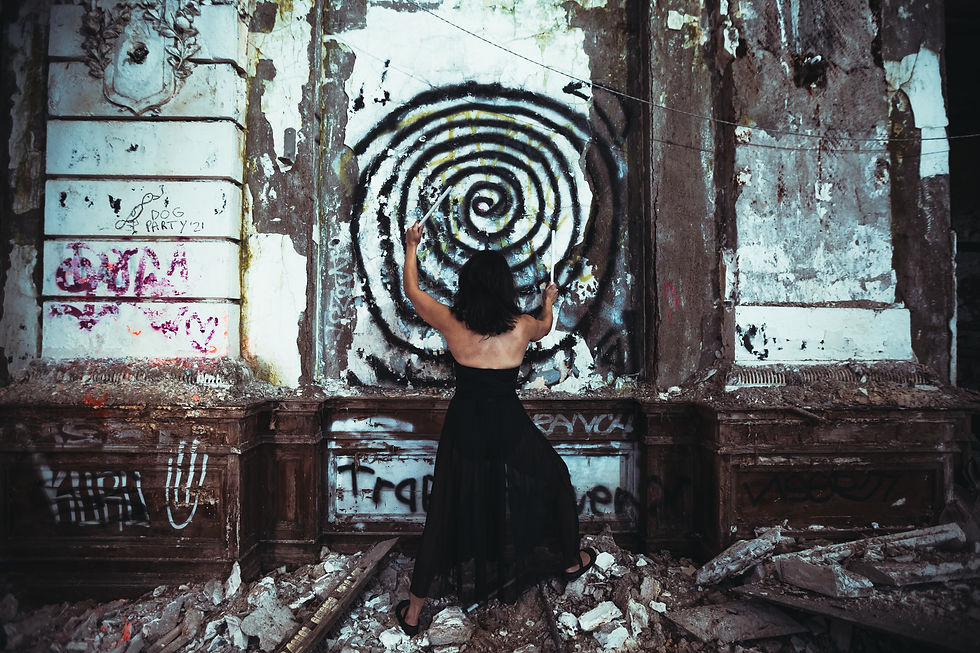
The poem and photos that follow were created for such a space.

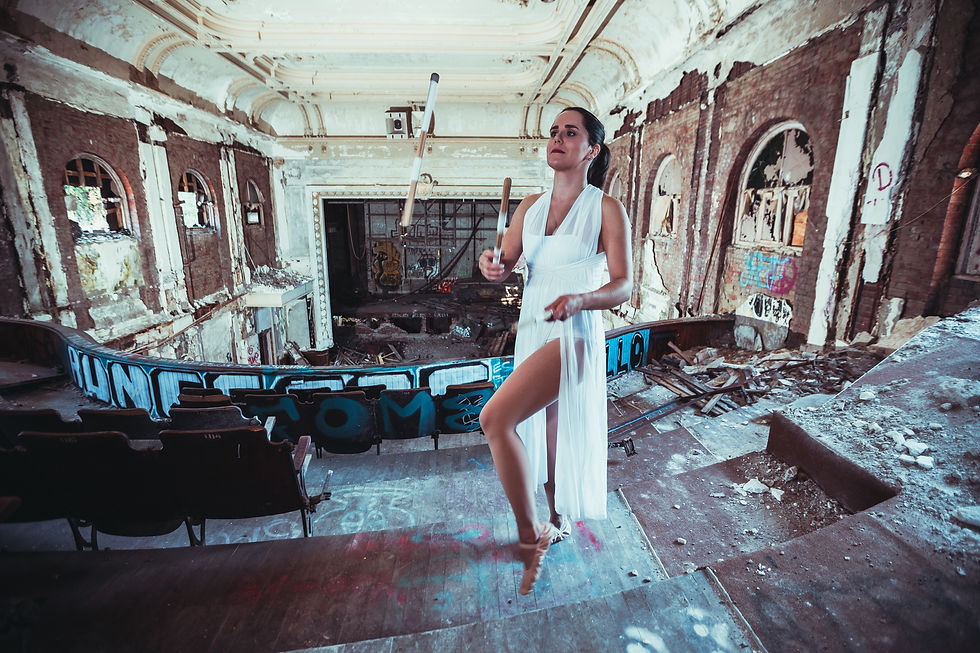
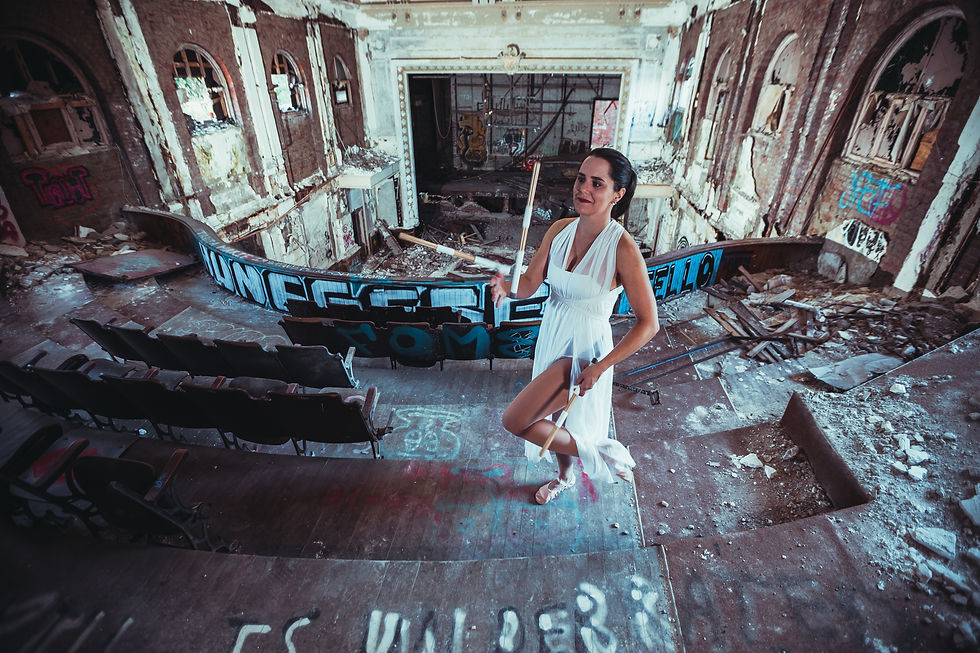
I Am Here
by Lindsay Surmacz

Is this the room inside my heart?
A stage where phantoms play?
A mystery so lonely, yet
I pass it everyday?
The images are fearsome, yet
the appetite succumbs
to eerie, echoed overtures
on more peculiar drums.
A concert hall’s graffitied walls
are splendid in their blight.
This place is where my hope begins
with darkness. And with light.
Where pretty things and gritty things
are ushered through the door
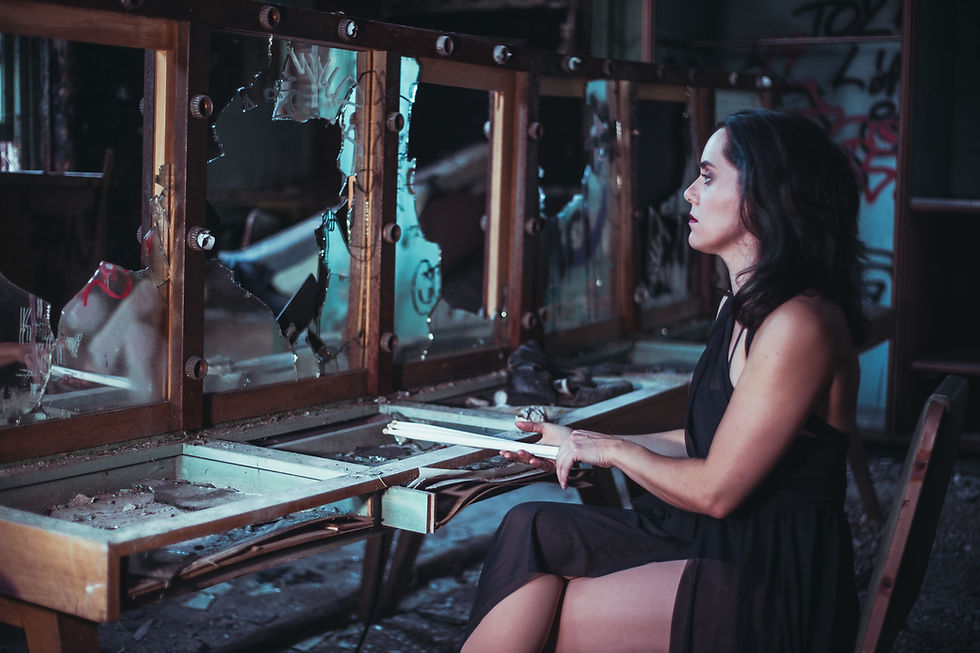
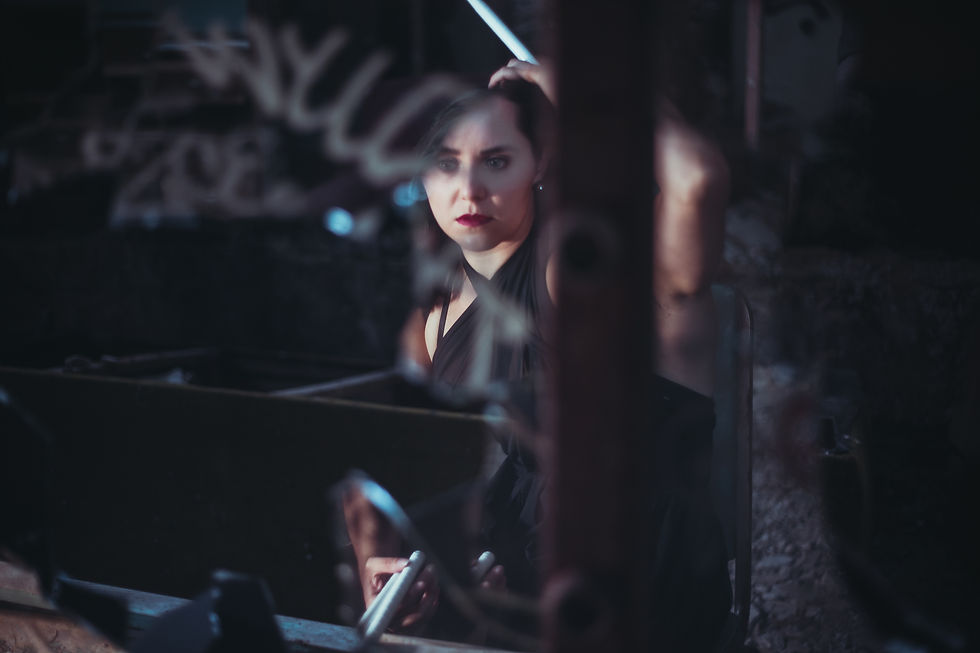
and trespass through the broken glass
and land upon the floor.
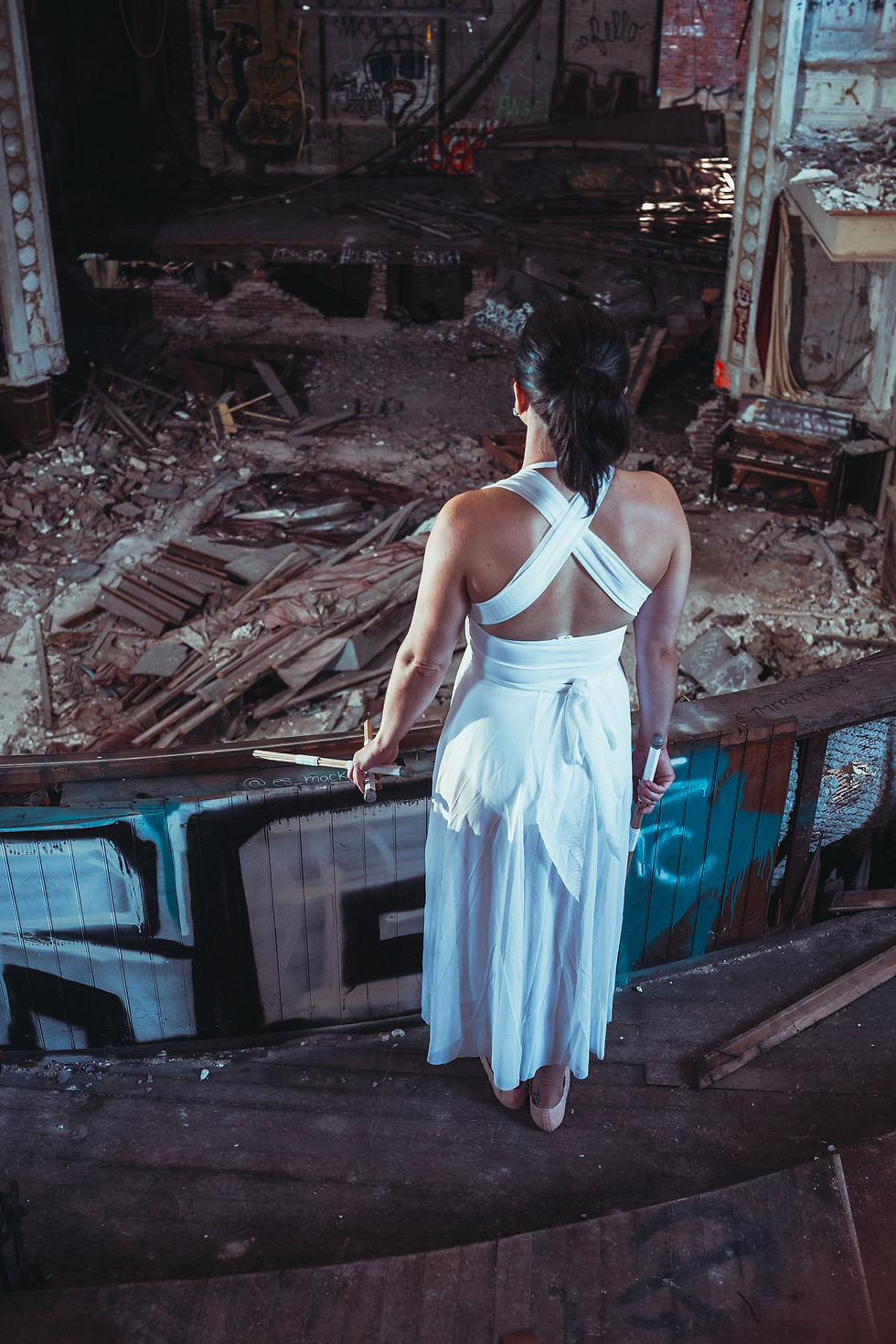
The floor, so old and traumatized,
is wilderness to me.
I step to dodge the open wounds
and climb across debris.
While all things here are possible
and nothing’s ever clear,
I move in service of my joy.
I live. And I am here.
I feel the ground, the light, the air,
through splintered works of art.
This court of endless energy -
the room inside my heart.
If these are ashes, dead and bright,
like dusty plains of Mars,
the thought of future phoenixes
propels me to the stars.
My noble stage where phantoms play,
approach it without fear.
Perceive, in you, its hushed refrain:
I live. And I am here.
Pittsburgh Art and the Origin of Pretty & Gritty
I first wrote I Am Here in 2021, before the current boom in generative AI. It was one of those pieces that wrote itself, line by line, over the course of many nights. With the lights turned off and my head resting on a pillow, I would fantasize about this abandoned auditorium in Pittsburgh’s South Side Slopes. It’s strange how the road to the subconscious is often best lit by darkness.
In the photos I’d seen online of this enchanting ghost, I saw evidence of a mysterious home I didn’t know I was looking for. A relic that I, in fact, passed often on my drive home from the circus studio without knowing it was there. I had
to properly introduce myself to it. Reach into it. Feel its grit crunch beneath my feet. And record a creative communion with it, showing something hidden but awake.
This is where I first put “pretty things and gritty things” together. It’s the origin of what became “Pretty & Gritty in The Iron City,” the creative credo on which Cirque Jag Productions is built. But even then, this work was about more than making a piece of Pittsburgh Art. It was an exercise in identity. Recognizing something, or someone, as unfinished, not over. And allowing the next incarnation to take shape.

What This Project Was. And What it is Now.
This work marked the second iteration of Punk & Pie Circus. Not as a reinvention for novelty’s sake, but as a natural expansion of purpose. What began as a platform for customized video greetings (most often Happy Birthday messages performed by the juggling, drumming character I created), slowly became something else. A place to make things. Not just cute, little performances, but projects.
Making stuff meant allowing more ambition. Longer-form videos. Deeper characters. Poetry. Work shaped by place as much as by skill. The focus shifted from crowd-pleasing toward creative inquiry.

From delivering a moment of delight to asking what kind of expression wanted to exist next.
It was the difference between knowing how to talk to actually having something to say.
I Am Here emerged from that shift. It was meant to be resonant without needing easy categorization. Curious, embodied, and responsive to its environment, it asked questions that required more planning and critical thinking.
How do I stay? How do I witness? How do I move through a space with care?
Four years later, Cirque Jag Productions is the next iteration of that same impulse. More ambitious, more intentional, and more explicit about its values. Storytelling, place-based creation, and multidisciplinary practice are more advanced and interconnected than ever.
This is art about making art.
Therefore, it’s only fitting to reprise I Am Here as a quiet fanfare. The intention is to expand the sentiment into We Are Here. “We,” meaning a cavalcade of Cirque Jags who love being “Pretty & Gritty in The Iron City,” even in times when we can’t see exactly where we are or where we’re going.


What the Project Wasn’t. And What It Still Isn’t.
I published this poem on what was, at the time, the new Punk & Pie Circus website on October 27, 2021. It marked the twentieth anniversary of my father’s sudden death. That timing was intentional, but I didn’t frame the piece as a memorial. I wasn’t trying to summarize grief or offer closure. I was insisting on continuance.
When I published it, I said there were few people on earth who could understand why a dilapidated theatre would feel like home to me. That’s because I grew up in places where stages were found or created. Between my house, my relatives’ houses, the high school auditorium, and the theatre company my father founded, I

was always among sets in various states of assembly, disassembly, upgrade, and decay.
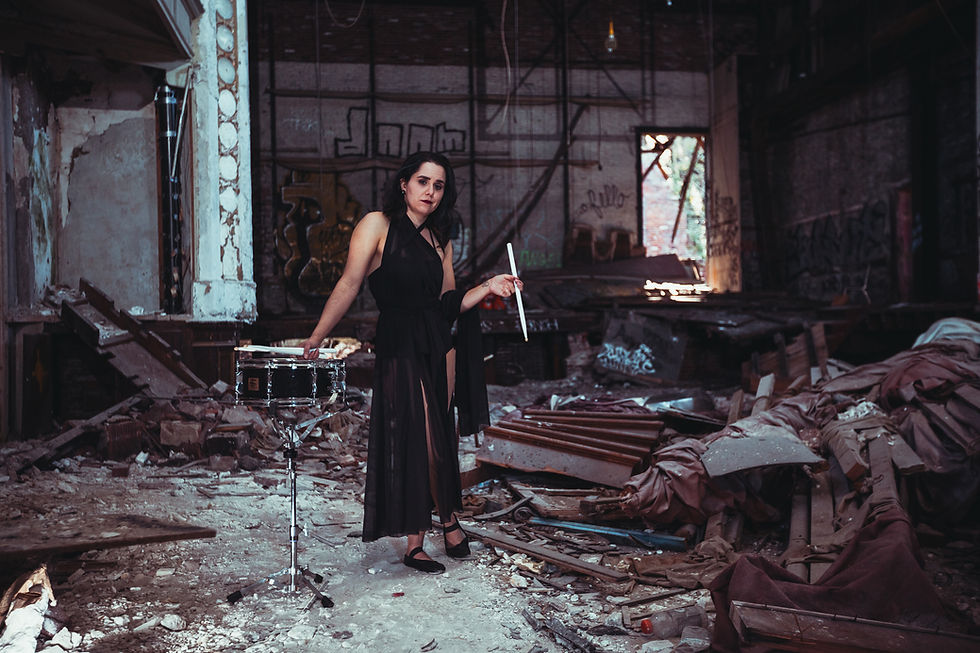
Moving through that auditorium in the South Side Slopes, drumsticks in my hands, the debris, graffiti, and echo became vocabulary in a sensory language that was new to me: remembering as an act of care.
To be clear, I never considered this a “radical” act. It wasn’t a stunt, a provocation, or a flirtation with danger. I didn’t trespass. I made the calls and wrote the emails to secure permission from the property owner to be there. With a ritual this important, I wanted to eliminate the energy of if we don’t get caught. Secrecy would’ve cheapened what I was trying to do. Care required consent.
Yes. It was “if we didn’t get caught.” The we consisted of myself and J. Aaron Hager, a dear friend and unofficial photographer of our circus community. Several of the photos on this site are marked the signature of his brand, Available Light Photography (@caspermilque).
Hager, as we called him, loved working with us cirque jags. His magic lay in a quiet but potent ability to emphasize not the tricks but the human performing the tricks. He was a rare and true witness.


What we couldn’t know the day we ventured together through the pretty and gritty of that
auditorium was that he, too, would leave us suddenly less than a year later. But this piece was not and still isn’t an elegy for him. It continues to breathe with him in it, through the images he made, the way he saw, and the care he practiced by simply paying attention. In a way, he also says “I am here.”
This piece also wasn’t an attempt to aestheticize decay. Pittsburgh, by virtue of its post-industrial history, is rich with spaces that are, “splendid in their blight.” The kind that are undeniably damaged and undeniably alive, inviting creative thinkers to work with what remains.

So while the place was captivating, I wanted it to be more than a coffee table book collection of images. It should make people look long enough to notice what still breathes. And by placing a living human in this damaged yet vital place, hopefully the art would convey that people, like places, can be wounded and still become something meaningful.
To recognize a space - be it physical or metaphysical - as undeniably alive is to accept a kind of responsibility toward it. Not to romanticize what’s broken, but to refuse to discard it. To see the unfinished not as waste, but as possibility, ready for its next incarnation, if someone is willing to stay and listen.
From Blight to Worth: How Art Rewrites Economic Value
When I published the piece, that intention surfaced in a way I didn’t anticipate. As the work circulated online and people engaged with it, one friend commented, “Where is this stunning and devastating theater, and is it for sale?”
That question mattered. It suggested that the work hadn’t merely documented a ruin, but had activated curiosity, attention, and value. It revealed how art, when it asks us to really see, can shift perception and, in doing so, open the door to economic possibilities rooted in care.
Attention is the first investment. And art is a hell of a way to attract attention. What was once overlooked becomes considered. What was considered becomes cared for. And care, given enough time, reshapes worth.
When Digital Storytelling Activates Place
As a project, I Am Here braided multiple art forms together, allowing each to extend the reach of the others.
At its core, the piece lives at the intersection of:
Circus Arts
Music (i.e., percussion)
Photography
Poetry
While the circus and percussion existed first as live, ephemeral acts, they were intentionally translated through digital means: photography and written narrative.
That translation, from embodied action to digital storytelling, is where awareness begins to compound. And it’s where overlooked resources can re-enter conversations.
Research across cultural heritage, tourism, and urban studies points to something artists have long known intuitively: how a place is seen determines whether it is cared for. Increasingly, that seeing happens first through digital media.
Scholars studying digital place storytelling consistently show that photography, film, and narrative content do more than document sites. They…
activate awareness
shape perception
invite interaction
In other words, they achieve all the goals necessary to incite economic engagement. Heritage and arts organizations deliberately use this strategy to support sustainable visitation and cultural value.
This matters for places that require significant resources for revitalization. Spaces that may not function as traditional performance venues but still carry experience, energy, and potential.
And few things reflect experience, energy, and potential better than a thoughtfully-conceived, well-executed piece of performance art.
When performance art is captured digitally and strategically shared, it extends the presence of the people and places involved, inviting curiosity and imagination — the first step toward funding, stewardship, and renewal. This dynamic is supported by case studies in the International Journal of Heritage Studies examining how social media–based storytelling connects online audiences to physical sites.


Staying With the Unfinished
“I Am Here” began as a private act of recognition, but recognition is rarely meant to stay private. Once we learn how to see—how to stand long enough in a place where darkness and light coexist—we start noticing how often those places are already calling to us.
This is an invitation to practice attention. Notice where something feels alive, even if it’s fractured. Meaning often appears after we decide to look for it.
For You: Give yourself permission to find your place.
There is likely a space already orbiting your life where “pretty things and gritty things”

converge. It might be a physical place (a building, a street, a room) or something more internal.
Try setting a simple intention: I am open to noticing where my hope begins. And if that language isn't your style, try a word. A single word that embodies this same sentiment to you. Only you need to know what it means.
It’s remarkable how readily something can appear when you give yourself permission to look for it. Just witness it. No need to fix it or claim it. Simply move through it with care.
For Yinz: Collaborating With Place, On Purpose
Cirque Jag Productions exists to create

work like this: art that listens to its environment and reflects it back with care. If you’re a business owner, property owner, arts organization, or cultural steward who believes in pretty things, gritty things, and coordinate confusion, check out the Creative Collaborations section of the Media Page.

Comments